
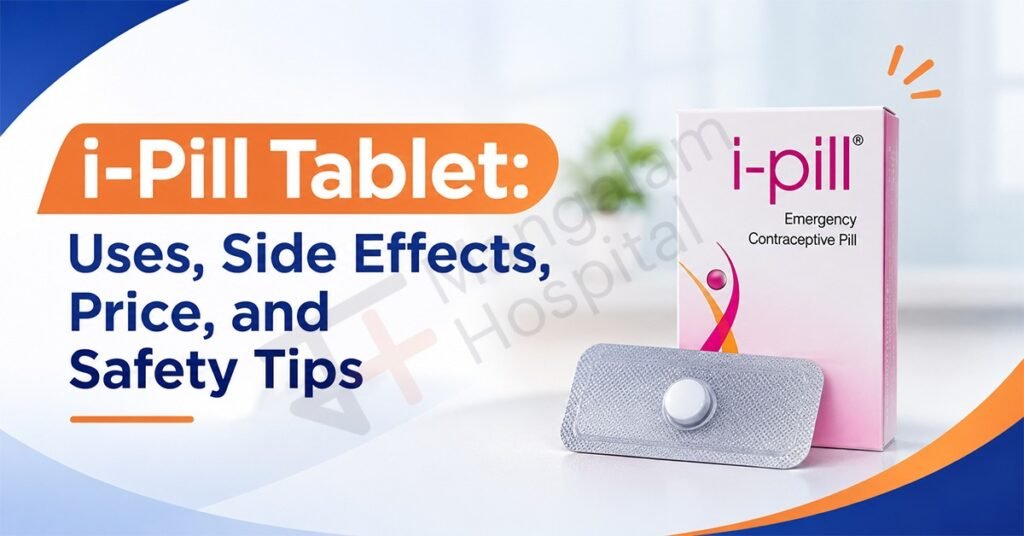
What Is the i-Pill Tablet?
The i-Pill is a type of emergency contraceptive that helps to prevent pregnancy after having unprotected sex or failing to use some birth control methods, such as a condom that broke or forgetting to take a pill. Its main component is the hormone levonorgestrel (1.5 mg).
Although i-Pill is commonly referred to as the morning-after pill, the intake does not have to occur the next morning. As it works best within 24 hours after unprotected sex, it should be taken as soon as possible, but no later than 72 hours after unprotected intercourse.
It is important to note that i-Pill is an emergency contraceptive rather than a common birth control method. Furthermore, it does not protect against sexually transmitted diseases (STDs).
How Does i-Pill Work?
The working of the i-Pill is based on delaying or inhibiting ovulation which refers to the release of an egg from the ovary. Therefore, when the process of ovulation is delayed it becomes impossible for the sperm to fertilize the egg leading to lower chances of conception.
The i-Pill works in the following manner:
- It delays ovulation: It inhibits or postpones the process of release of the egg from the ovary.
- It lowers the chances of fertilization: The delay in ovulation lowers the chances of the sperm meeting the ovum.
- It is effective when used early: The effectiveness decreases with time as the time passes from the occurrence of unprotected intercourse.
- It does not terminate a pregnancy: It doesn’t have the ability to stop an existing pregnancy and can’t be used like abortion pill.
The i-Pill may not be effective in case ovulation has occurred hence it is always better to take it at the earliest possible time.
What Are the Uses of i-Pill Tablets?
The purpose of i-Pill is to prevent unintended pregnancies after unprotected intercourse. It can be utilized in those circumstances when birth control fails.
i-Pill is applicable in many occasions:
- Unprotected intercourse: when sexual intimacy took place without the application of any contraceptives.
- Condom failure: in cases when the condom ripped or came off or has not been used properly.
- Missed pills: if hormonal birth control pills have not been taken on a regular basis, increasing chances of pregnancy.
- Contraceptive failure: in these cases when methods of contraception do not produce expected results.
- Assault: it can be given as emergency contraception in cases when sexual assault took place.
Nevertheless, one should remember that i-Pill should not be used regularly and should be reserved for emergency situations only.
You can read also:- How to Stop Vomiting in Pregnancy: Home Remedies and Tips
What Are the Side Effects of i-Pill Tablets?
Like other hormonal medications, i-Pill may cause some side effects right from the time of administration. Most side effects are mild and go away in a few days on their own.
Some of the common side effects of i-Pill are as follows:
- Nausea or vomiting: Some women may experience nausea or vomiting after taking the pill.
- Headache: Hormonal changes can cause minor headaches.
- Belly pain: The person may experience mild pain in the abdominal region.
- Breast tenderness: Breasts can become swollen or tender for a short time.
- Dizziness or fatigue: One may feel dizzy or fatigued as well.
- Menstrual cycle irregularities: The next menstrual cycle may come too early or too late.
- Spotting and bleeding: One can also experience bleeding before the next period.
When should one consult a doctor?
Medical attention must be pursued in cases when your menstrual cycle has been disrupted for more than a week, you experience excruciating pain in the lower abdominal area, or if your bleeding is profuse.
In case the periods have not occurred as per expectations and you experience vomiting after taking an i-pill, you must inform the nearest pharmacy as you may be required to take another pill.
You can read also:- Water-Borne Diseases: Types, Causes, Symptoms & Treatment
How Much Is The i-Pill Price In India?
The price of i-Pill is dependent on the pharmacy where it is available.
The average cost of buying a single i-Pill ranges between ₹74 to ₹78 depending on the pharmacy.
The i-Pill can be obtained from accredited pharmacies as well as various websites selling medicines online. It is always better to double-check the medicine pack for its expiry and manufacturing details before making a purchase.
Note: The prices may change over time as per the changes made.
What Are the Benefits of i-Pill?
The i-Pill is an effective solution to use in the case of contraceptive method failure or unprotected intercourse.
The important benefits are the following:
- The ease of use: The i-Pill is sold in a single tablet dose of levonorgestrel 1.5 mg.
- Effectiveness: It reduces the possibility of unexpected pregnancy.
- Convenient usage: It is an oral drug, so no surgery is required.
- No fertility effects: The i-Pill has no effect on a woman’s ability to become pregnant in the future.
- Extra effectiveness: The i-Pill acts as an additional means of contraception in case of the common method of contraception failure.
Nevertheless, the i-Pill is not absolutely safe and does not protect from occurrences of unprotected sex or STIs.
What Safety Tips Should You Follow Before Taking i-Pill?
While i-Pill is usually safe during the time of emergency, it is crucial to exercise caution while using it.
It ought to be taken as soon as possible after unprotected intercourse, preferably within 24 hours, certainly within the 72-hour period.
Follow the prescribed dosage of 1.5mg without combining other medication unless directed by a medical professional.
This medication is not to be used as an everyday contraceptive method.
Be aware that i-Pill doesn’t protect you from sexually transmitted diseases.
If you are sick within 2 hours after taking the medication, you may need to take it once again after receiving consultation.
If your period is overdue for more than 7 days following the use of i-Pill, you should do a pregnancy test.
If this method of contraception is required too often, consult with a gynecologist.
Do not forget to inform your physician about other drugs that you take at the same time such as specific anti-seizure medications, rifampicin, or HIV drugs.
Conclusion
Understanding the usages, effects, dosages, and safety considerations of the i-Pill is important before choosing the emergency contraception method. Although this is a very effective method of preventing unwanted pregnancy, one of the most important things to be kept in mind is that it should not be used as a replacement of regular birth control methods. Adhering to instructions related to the utilization of the pill will help achieve excellent results and minimize the chances of worrying about it.
In case there are any questions regarding the emergency contraception methods, menstrual problems, or reproductive issues, one should seek professional medical advice. The Department of Obstetrics and Gynecology at Mangalam Hospital in Jaipur provides expert advice on all gynecological concerns as well as related issues.
Frequently Asked Questions About i-Pill Tablets
1. The purpose of an i-pill?
Ans. The i-pill is an emergency contraceptive that is taken to prevent pregnancy after unprotected sexual intercourse or contraceptive failure (like a broken condom). It consists of levonorgestrel 1.5 mg and prevents pregnancy by delaying ovulation.
2. How should i-pill be taken?
Ans. i-pill tablet (1.5 mg) has to be consumed orally as soon as one can after unprotected intercourse (the sooner, the better, but not later than 72 hours). This should be done according to the instructions given on the product; also, if a person vomits within 2 hours after swallowing the pill, he or she should consult a doctor.
3. Is it safe to take 3 i-pills within a month?
Ans. Taking the pill repeatedly is not believed to create adverse effects in terms of long-term health and infertility, although it might cause menstrual disorders, spotting, and other hormonal effects.
4. Does i-pill have a 100% efficiency?
Ans. No, it does not. Its effectiveness highly depends on how early it is administered, whether ovulation occurred, and some individual characteristics.