
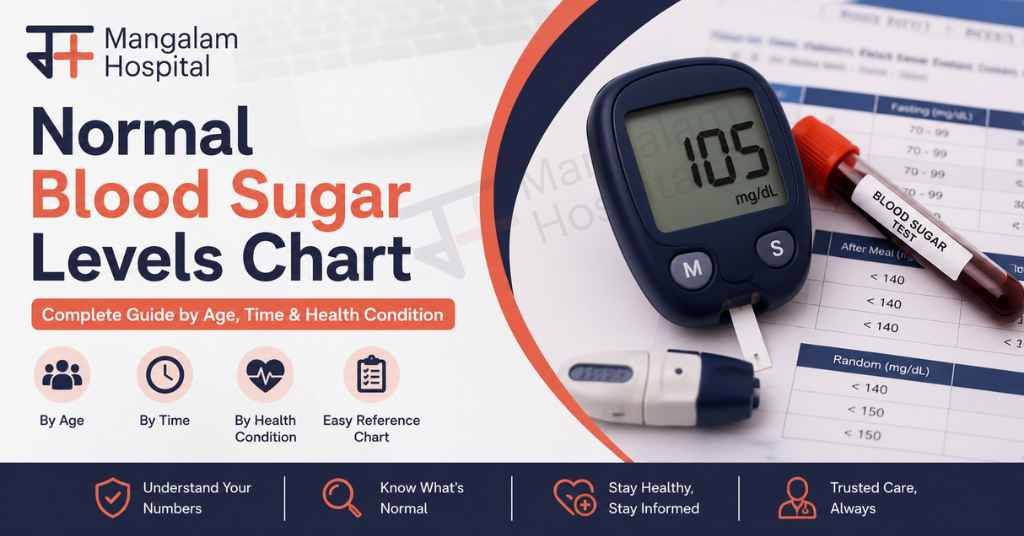
Knowing how to gauge blood sugar levels is essential for determining how efficiently your body converts glucose. A Normal Blood Sugar Levels Chart enables us to ascertain whether the blood glucose level is within the normal range or not. At the same time, the indications of the reading depend on different factors like the testing time, if it has been conducted after eating, age, etc.
Blood sugar is prone to fluctuation all through the day. Meals, exercising, stress, illness, sleeping, fluctuations in weight, or taking particular medication can result in either high or low levels of glucose. Hence, every individual reading may not sufficiently assess the state of health.
What Is Blood Sugar?
Blood sugar (or blood glucose) refers to glucose present in the blood. Glucose is a key source of energy for the body and this group of carbohydrates in foods is responsible for preparing glucose.
Carbohydrates are broken down into glucose during the digestion process after eating. The hormone insulin produced by the pancreas stimulates this process and facilitates absorption of glucose into cells.
If the body does not produce enough of insulin or it is not used effectively, the glucose stays in the blood. Constantly high blood glucose can pose a risk for developing diabetes.
In India, blood glucose is expressed in mg/dL.
In healthy adults, fasting blood glucose levels below 100 mg/dL can be considered normal while the fasting blood glucose level of between 100 and 125 mg/dL can indicate prediabetes. Finally, the blood glucose level of over 126 mg/dL generally indicates diabetes.
Why Do Blood Sugar Levels Change With Age?
Blood sugar is commonly believed to rise as one ages. Diabetes diagnostic ranges, however, do not rely on the age of a person.
Nonetheless, age is still a factor in glucose regulation. Physical inactivity, change of muscle mass, insulin sensitivity, a person’s diet, weight, prescribed medicines, and other medical problems are some of the reasons that affect blood sugar.
Even youngsters and adolescents can obtain abnormal blood sugar levels. Thus, their results should be interpreted correctly without disregarding age, growth, symptoms, history of illnesses, and the type of test performed.
At the age of 35, adults begin undergoing diabetes screening, however, high-risk individuals may have to do it earlier, since pregnancy has its criteria for blood sugar testing as well.
You can read also:- What Happens in the 9th Month of Pregnancy?
When Should You Check Blood Sugar?
The timing of the blood sugar tests is contingent upon the objectives of these tests. Doctors might recommend performing the blood sugar tests at specific times during screening, the diagnosis of diabetes, or the management of the disease.
Fasting Blood Sugar Test
The fasting blood sugar test is usually done after 8 to 10 hours of not eating. During the fasting period, even calorie-containing drinks should be kept away.
The fasting blood sugar test is mainly done in the screening of prediabetes and diabetes. Non-pregnant adults should generally have a fasting blood sugar level of less than 100 mg/dL.
Before Meals
Patients with diabetes may need to check their blood sugar before having their meals as this data provides insight about how glucose operates inside the body and helps specialists make relevant adjustments in the patient’s treatment.
The results of glucose levels targeting at different points during the treatment can substantially differ from the results of the tests aimed at diagnosing the condition.
After Meals
Blood glucose rises after eating food because carbohydrates are processed and absorbed as glucose. This increase can differ depending on food consumed, the amount of food, physical exercises done, and insulin activities among other factors.
What Is the Normal Blood Sugar Level by Age?
| Age Group | Fasting Blood Sugar (mg/dL) | Post-Meal Blood Sugar (mg/dL – 2 hours after eating) |
| Children (6–12) | 80–100 | 100–140 |
| Teens (13–19) | 70–100 | 90–140 |
| Adults (20–59) | 70–99 | <140 |
| Seniors (60+) | 70–110 | <180 |
These values serve as a guideline and may vary slightly depending on individual health conditions. Using a blood sugar levels chart can help with more precise monitoring and better diabetes management or prevention.
There isn’t any single chart available which shows that the blood sugar should grow as the person’s age increases. This is why it is possible to work with existing norms of diagnosis for almost any adult. For instance, fasting blood sugar of less than 100 mg/dl is usually considered to be normal. Blood sugar results that are between 100 mg/dl and 125 mg/dl may indicate prediabetes diagnosis while the level that exceeds 126 mg/dl may mean that the person has diabetes.
As for children and adolescents, doctors have to evaluate more factors before drawing any conclusions regarding the results of glucose tests.
Older adults with diabetes may receive specific blood sugar levels defined by the practitioner. The expert may take into account such reasons as overall health condition, use of medication, and other diseases.
This means that instead of focusing on the age of an individual, one should find out the type of the test, its time, and whether the individual has diabetes or any other diseases.
You can read also:- Calf Muscle Pain: Common Reasons, Symptoms, and Treatment
Normal Blood Sugar Before and After Meals
The level of blood sugar is frequently low prior to a meal since at this point in time, there haven’t been any carbohydrates consumed in the meal. Once food is consumed, the level of glucose in blood tends to rise.
In order to evaluate blood sugar levels, medical professionals may utilize the oral glucose tolerance test, which consists of consuming a sugary drink, followed by taking measurements of blood sugar level at certain time intervals.
It is deemed to have normal results when blood sugar level is below 140 mg/dL after 2 hours; however blood sugar level of between 140 mg/dL and 199 mg/dL may mean that the patient has pre-diabetes, while that of 200 mg/dL and higher indicates diabetes.
This tests differs from the procedure of checking blood sugar after having eaten a meal.
How Does HbA1c Show Average Blood Sugar?
HbA1c, in other words glycated hemoglobin, estimates blood sugar level over a longer time period. An HbA1c test reflects average blood sugar levels obtained through the last 2-3 months and a blood glucose test measures blood sugar levels at a specific point in time.
HbA1c values lower than 5.7% are referred to as normal values, while 5.7-6.4% is indicative of prediabetes. Any results above 6.5% suggest further diagnosis to confirm if the patient indeed has diabetes or not.
There are many medical conditions that can affect the results of HbA1c therefore in such cases a different glucose tolerance test may be recommended.
Factors Impacting Blood Glucose Levels
There are various factors that can influence blood sugar spikes up or down as follows:
- Eating food with large amounts of carbs and sugar
- Physical activity
- Change in diet
- Emotional stress
- Poor sleep
- Infections
- Some drugs
- Change in insulin sensitivity
- Weight loss or weight gain
- Alcohol use
Single glitches are not always linked to diabetes. However, continuous high numbers must be consulted with medical professionals.
How Can You Maintain Healthy Blood Sugar?
You can maintain your blood glucose levels through certain healthy lifestyle practices. Have a balanced diet including fruits and vegetables, legumes, whole grains, and proteins such as fish, beans, and lean meats. It is advisable to cut down on sugary food and beverages as well.
Exercising regularly will improve the use of glucose by the body. In order to help fight metabolic problems, one should maintain the correct body weight, sleep sufficiently, manage stress, and avoid smoking. People with diabetes should follow recommendations of healthcare experts regarding treatment.
When Is It Time to Consult a Doctor?
If your glucose readings are persistently high, you should consult your doctor. Remember the symptoms: extreme thirst, urinating frequently, unusual tiredness, weight fluctuations and blurred vision.
In fact, a very high blood sugar level with severe tiredness, nausea, trouble breathing, disorientation, or loss of consciousness can be an emergency situation. All people taking insulin or other diabetes medications should call their doctor when they have low blood sugar levels frequently.
Conclusion
Although the table of normal blood sugar results makes the interpretation of glucose measurements easier, it is important to always consider the reading together with the test type and timing. In general, a fasting blood sugar of less than 100 mg/dL and an HbA1c of less than 5.7% are considered normal for people not expecting a baby. If a person has fasting blood sugar between 100 and 125 mg/dL or an HbA1c between 5.7% and 6.4%, he or she may have prediabetes. Higher numbers may indicate problems requiring more serious solution or intervention.
At the Mangalam Hospital, regular health check-ups and blood glucose level monitoring can help detect abnormal blood glucose readings early in patients, especially those with risk factors or symptoms of diabetes.
FAQs
1. What is the normal blood glucose level?
Ans. Normal blood glucose level in a healthy adult who is not pregnant is less than 100 mg/dL. One has knowledge of the differentiators in the process of blood testing.
2. What does blood glucose level mean?
Ans. Blood glucose level is a measure of the glucose in the blood. Glucose is the source of energy while insulin is responsible for carrying glucose from blood to the cells.
3. What is called fasting blood glucose?
Ans. A blood glucose level of below 100 mg/dL is regarded as fasting blood glucose. Any result between 100 mg/dL and 125 mg/dL puts an individual in the pre-diabetes category.
4. What quantity is considered to be an acceptable blood sugar reading after eating?
Ans. Blood sugar levels increase immediately following eating and therefore a specific post-meal measurement cannot be set for everyone. For example, during a standard oral 75-gram glucose tolerance test, a glucose reading (for the two-hour period) of less than 140 mg/dL would be considered normal.
5. Is a blood sugar reading of 100 mg/dL normal?
Ans. This depends on the timing of the test, in particular if the reading of 100 mg/dL is a reading after fasting. In the latter case, it is at the borderline level of impaired fasting glucose or prediabetes. If the reading was taken after eating, its results would vary based on the timing of the reading.