
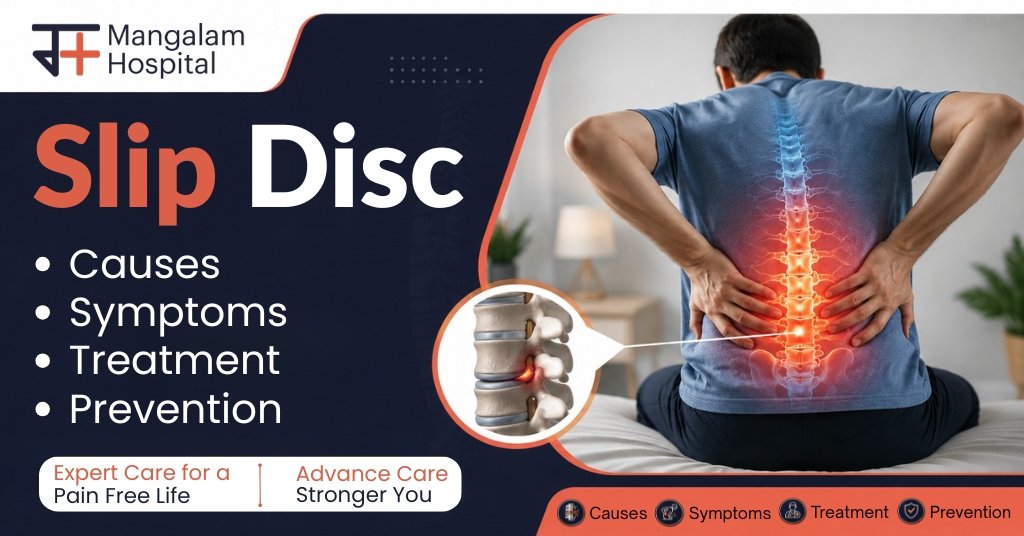
Back pain is a nation’s growing concern, especially in people who have jobs that require them to spend extended hours seated or in an awkward position for a majority of their day (such as those who stand while performing a task), people who improperly lift heavy items, or those who have poor posture.
One of the leading causes of chronic back pain is a “slipped disc”. If you’ve ever been curious about what causes a slipped disc, how serious they can be as well as the best ways to treat a slipped disc, then you’ve come to the right place. This guide should answer your questions using the simplest of terms.
A slipped disk can greatly hinder your day-to-day activities, range of motion, sleep and overall quality of life. The good thing is that if it’s diagnosed early on and treated appropriately, most people will completely recover from a slipped disk and return to their normal activities.
What Is a Slip Disc?
A slipped disc occurs when the soft, cushiony discs that sit between your vertebrae become damaged or out of alignment. The discs in your spine act as shock absorbers and allow for the smooth movement of your spine.
When a disc slips or bulges, it could affect the nearby nerves and a person could experience pain, numbness, or weakness. A slipped disc may also be referred to as a herniated disc or bulging disc.
Slipped discs commonly occur in the:
● Lumbar spine (lower back)
● Cervical spine (neck)
The lumbar region (lower back) is where the majority of the body weight is supported; thus, this area is most likely to develop this type of injury.
Common Causes of Slip Disc
People often wonder, “How does a loss of support from the spinal column develop?” That can occur slowly or very quickly as a result of an injury or disorder. Here are some of the most frequent reasons for a loss of support in your spine:
- Incorrect Posture – Prolonged sitting and improper posture can place additional weight on your discs, ultimately causing you to lose support in your back.
- Heavyweight Lifting – Improperly lifting a heavy weight can put extra stress on your discs and result in damage.
- Age – As we grow older, our discs become less elastic and contain less water; thus, they are more likely to fail.
- Sudden Injury or Trauma – Sudden falls, car accidents, or sudden jerking movements can create severe damage to the discs.
- Obesity – Carrying too much weight creates additional pressure and can reduce the support that your spine receives.
- Inactivity – Weak core and back muscles make it difficult to provide proper support for your spine.
Signs and Symptoms of Slip Disc
Symptoms of a slipped disc can vary based on which nerve is impacted. While some individuals may only feel mild pain, others might feel extreme pain.
Common Symptoms of a Slipped Disc:
- Lower Back Pain
The most typical symptom of a slipped disc is a persisting (or sharp) lower back pain. - Pain in Arms and/or Legs
If the slipped disc presses against nerves, pain can radiate sometimes to the legs (more often the legs) or sometimes to the arms (less often) (sciatica). - Numbness/Tingling
Many patients experience either tingling or numbness in the area(s) impacted by the damaged nerve. - Weakness in Muscles
A loss of muscle strength can occur in the legs, arms, and feet due to nerve compression. - Difficulty moving
Normal activities (standing, bending, walking, sitting) may be painful when performed for long periods. - Neck Pain
A cervical slipped disc can create shoulder pain and tightness in the neck.
You can read also:- Nipah Virus Symptoms: Early Warning Signs You Should Never Ignore
When Should You See a Doctor?
Consult a spine specialist if you have had back pain for longer than a couple of weeks;
- if your pain spreads to your legs or arms;
- if you have numbed areas or have had any weakness;
- if you cannot walk or perform your activities of daily living because of the pain;
- or if you are not able to have a bowel or bladder movement. Receiving a diagnosis will allow your physician to help you prevent further injury or develop a plan for recovering from your current injury faster.
How a Slip Disc Is Diagnosed?
Patients often wonder how doctors determine if a disc is herniated (slipped). The doctor’s diagnostic workup usually includes a physical exam and some type of imaging study.
- Medical History and Physical Examination: The doctor evaluates the patient’s signs and symptoms as well as assessing posture, checking reflexes, checking for muscle weakness, checking for nerve dysfunction.
- MRI Scan: An MRI is the most accurate imaging study for detecting a herniated disc, as it visualizes the spinal discs themselves, the vertebrae, and any inflammation associated with a herniated disc.
- X-ray: An x-ray will usually help to rule out any other fracture or pathology of the spine that could cause similar symptoms.
- CT Scan: In certain cases where an MRI is not available, CT scans will provide very detailed views of bony anatomy of the spine.
- Nerve Tests: If a doctor suspects any nerve-related injury exists, nerve conduction studies will likely be obtained.
Best Treatment Options for Slip Disc
People often want to know about the best slip disc treatment available. The best treatment for a slip disc will depend upon the severity of your condition. Most patients can improve their condition without the need for surgery.
- Resting and Avoiding Activities that Cause Pain — While resting for a limited time and avoiding activities that make the pain worse can help reduce inflammation, complete bed rest should not be used for an extended period.
- Medication — Your doctor may recommend taking a variety of medications to control pain and swelling. These can include:
- Pain relievers; muscle relaxers; anti-inflammatory medications
- Physiotherapy — Physiotherapy should be considered one of the best treatments for a slip disc. Strengthening the muscles of the back through physiotherapy will help improve flexibility in the back and decrease the amount of pressure placed on the nerves from the spine.
- Common types of physiotherapy exercise for people with a slip disc include: Stretching; core strengthening; back extension; improving posture
- Heat and Ice Treatment — The use of heat or ice packs may relieve stiffness in muscles or reduce pain.
- Steroid Delivery via Epidural Injection — For patients suffering from severe nerve pain due to a slip disc, a doctor may recommend a steroid injection to decrease the level of inflammation around the affected area(s).
- Surgical Treatment — Surgery may be necessary if:
- You experience continuing severe pain; experience significant nerve compression; experience progressive weakness; or conservative treatment fails.
Surgical options using new minimally invasive techniques have made surgery an option that allows for a quicker recovery and less post-operative pain than traditional surgical techniques.
How to Prevent Slip Disc Naturally
A lot of people ask the question “can a herniated disc be prevented?”, as a matter of fact, yes! There are ways you can help to keep your spine healthy by living a healthy lifestyle:
- Maintain Proper Posture
Sit straight and stand tall, this will help you have proper alignment. - Exercise Regularly
When you exercise regularly you will be able to keep your back and abdominal muscles strong and flexible. - Ensure That You Use Proper Lifting Techniques
When lifting any item you should bend your knees rather than bending your back. - Maintain a Healthy Weight
If you have too much excess weight it will cause more stress and strain on your back. - Get Up and Move Around Often
If you find yourself sitting for long hours at a time, try to take breaks and stretch out during the day, this will help to keep your back healthy. - Use Proper Ergonomic Equipment
Ensure that you are using the right kind of furniture/chairs (and workspace), this will help you to keep proper posture.
Why Choose Mangalam Hospital for Slip Disc Treatment?
Mangalam Hospital Jaipur is a leader in advanced spine healthcare with advanced diagnostic capabilities to diagnosis and treat a slipped disc or any other condition associated with the spine.
Included in the services provided by Mangalam Hospital Jaipur are:
- Well experiences spine specialists and orthopedic surgeons
- Advanced imaging and other diagnostic equipment
- Physiotherapy and rehabilitation services,
- Management options using minimally invasive surgery techniques,
- Individualized treatment so that clients can return to their normal lifestyle quicker.
Patients can receive expert physician care using progressive techniques to relieve their pain and enhance their motion.
Conclusion
A slipped disc can be very painful and drastically decrease your ability to perform your daily activities. However, if you are able to quickly identify the cause of your pain and seek appropriate treatment, a great deal of discomfort can be mitigated. Understanding the cause of a slipped disc, knowing the symptoms of a slipped disc and following preventive measures will help preserve your spinal health.
If you are experiencing ongoing back and or leg pain, numbness/tingling or weakness in your legs, you should consider consulting with the highly trained and skilled medical professionals in the Orthopedic and Spine Care Department at Mangalam Hospital Jaipur.
The Orthopedic and Spine Care Department has the ability to provide you with the prompt and effective diagnosis, physiotherapy, pain management and surgical/musculoskeletal treatment options necessary for recovering safely and successfully.