
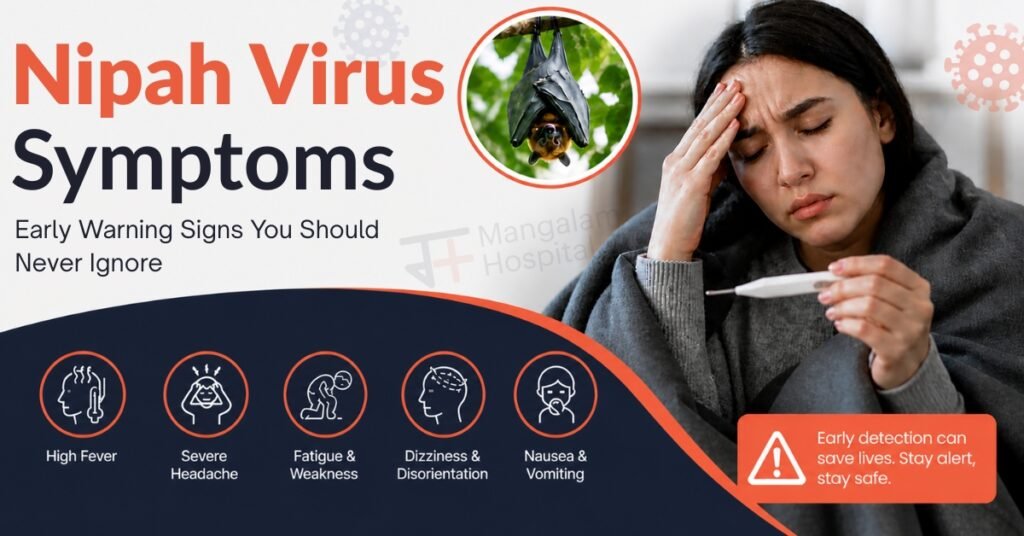
There has been an increase in the awareness of Nipah Virus Infection in the last few years because of the number of deaths (high mortality rate) caused by the virus and its fast spread in certain parts of the world.
If you know the early signs of the Nipah Virus Infection, you may be able to determine the correct course of action for treatment and prevention. The early symptoms of the Nipah Virus Infection, how it’s diagnosed, and how it’s treated will be presented in a beginner-friendly, conversational writing style so you will know exactly what to look for.
What is the Nipah Virus?
The Nipah virus is a zoonotic virus that transmits from animals to humans. It was first discovered in Malaysia in 1998 and is most commonly connected to flying foxes or fruit bats. Humans can contract the Nipah virus by direct contact from an infected animal, through contaminated foods, or via another infected individual.
The Nipah virus can have very serious effects on both the brain and cause extreme respiratory illness; therefore, it is considered a very dangerous virus.
What Are the Early Warning Signs of the Nipah Virus That Must Be Taken Seriously?
Recognition of the early signs of nipah virus is key to prompt treatment: symptoms may progress rapidly.
Typical early symptoms include:
- fever and headache
- muscle soreness and fatigue
- itchy throat
- vomiting and feeling dizzy
As the disease progresses, the following symptoms occur:
- serious breathing difficulties
- disorientation/confusion
- convulsions
- inflammation of the brain (encephalitis)
- In the late stages of the disease: coma
Nipah virus symptoms may occur as early as 4-14 days after exposure. Rapidly developing mild symptoms into severe forms makes recognition and treatment early is essential.
How Does Nipah Virus Spread in Humans?
You can learn to protect yourself against the viruses by knowing how they are transmitted.
You can became sick from a virus through a variety of methods:
- From Animals – through contact with infected bats and/or pigs.
- Through Food – through the consumption of contaminated fruits or raw date palm wine.
- From One Person to Another – through close contact with someone who has the virus (especially healthcare workers or caregivers).
How is Diagnosis of Nipah Virus Done?
Nipah virus, when diagnosed early, can save lives, but it can be difficult to diagnose as its symptoms are similar to symptoms of other viral infections.
When diagnosing Nipah virus infection, doctors generally use several methods, including:
1. Review of clinical history (travel and exposure to infected area),
2. Laboratory testing including:
- RT-PCR (detection of viral RNA),
- ELISA (detection of antibodies), or
- Brain imaging of severe neurological cases (e.g., coma),
If a patient presents with symptoms that could be consistent with Nipah virus infection, along with clinical history of exposure to a patient with confirmed Nipah virus infection, the physician can initiate rapid confirmation of the infection.
When Should You Visit a Hospital or Doctor?
If you see signs of illness, do not wait to get help.
If any of the following happens to you, see a doctor:
If you have a continuous fever over 39° C (102° F) and have a sudden and severe headache, Difficulty Breathing, Confusion, Drowsiness, had close contact with an infected person, animal, or place, within the week before the onset of your illness, you should see a doctor as soon as possible.
How is Nipah Virus Treated?
Currently, there is no approved specific antiviral treatment for Nipah virus infection. Therefore, the primary treatment consists of supportive care, including:
1. Fluid Replacement
2. Pain & Fever Relief (Antipyretics)
3. Respiratory Support (Oxygen if Needed or Ventilator if Required)
4. Neurological Symptom Monitoring
There have been some limited studies of the use of the antiviral drug Ribavirin; however, further research is required to determine the efficacy of this drug.
How Can You Protect Yourself from Nipah Virus?
Although treatment options are restricted, preventive methods can be implemented successfully.
Examples of simple preventive methods are:
- Do not consume fruits that have been partially consumed by animals
- Wash your fruit completely before consuming it
- Avoid raw date palm sap
- Practice good hygiene and wash your hands frequently
- Avoid direct contact with anyone who has tested positive for the virus
Be sure that health personnel use appropriate personal protective equipment when working with any potential cases of Nipah virus disease.
Conclusion
The first step to preventing Nipah virus contagion is to be aware of the virus. If you understand the signs and symptoms of Nipah virus disease, then you can treat the disease quickly and possibly save someone’ s life. Although Nipah virus infection is very uncommon, the severity of the illness is very severe so it is critical to stay aware of the potential and remain prudent in your actions. If you or your family are experiencing any symptoms please do not ignore them. Early medical treatment at mangalamhospitaljaipur can greatly lower your risk, as can good hygiene and preventative preparations. Stay Healthy, Stay Informed, and Take Care of Your Health.
FAQs
1. What are early signs of Nipah virus?
Fever, headache, body aches, and tiredness are common early signs. If untreated, some individuals experience rapid worsening of these symptoms to develop into very serious illness.
2. Is Nipah virus transmissible from person-to-person?
Yes. It is transmissible from person-to-person through direct skin to skin contact with an infected person, primarily in hospital settings or when in close contact with infected patients.
3. Is there a cure for Nipah virus? There is no specific cure at this time for people who have Nipah virus infection. Treatment is largely supportive and focused on providing comfort and managing symptoms experienced by people with Nipah virus infection.